
Why We Don't Use Supari (Areca Nut) in Our Mukhwas: The Truth Behind Modern Pan Masala
Discover why traditional Indian mukhwas never required supari or tobacco, how areca nut harms your gums and gut, and how pure rose gulkand and roasted seeds offer clean after-meal digestive refreshment.
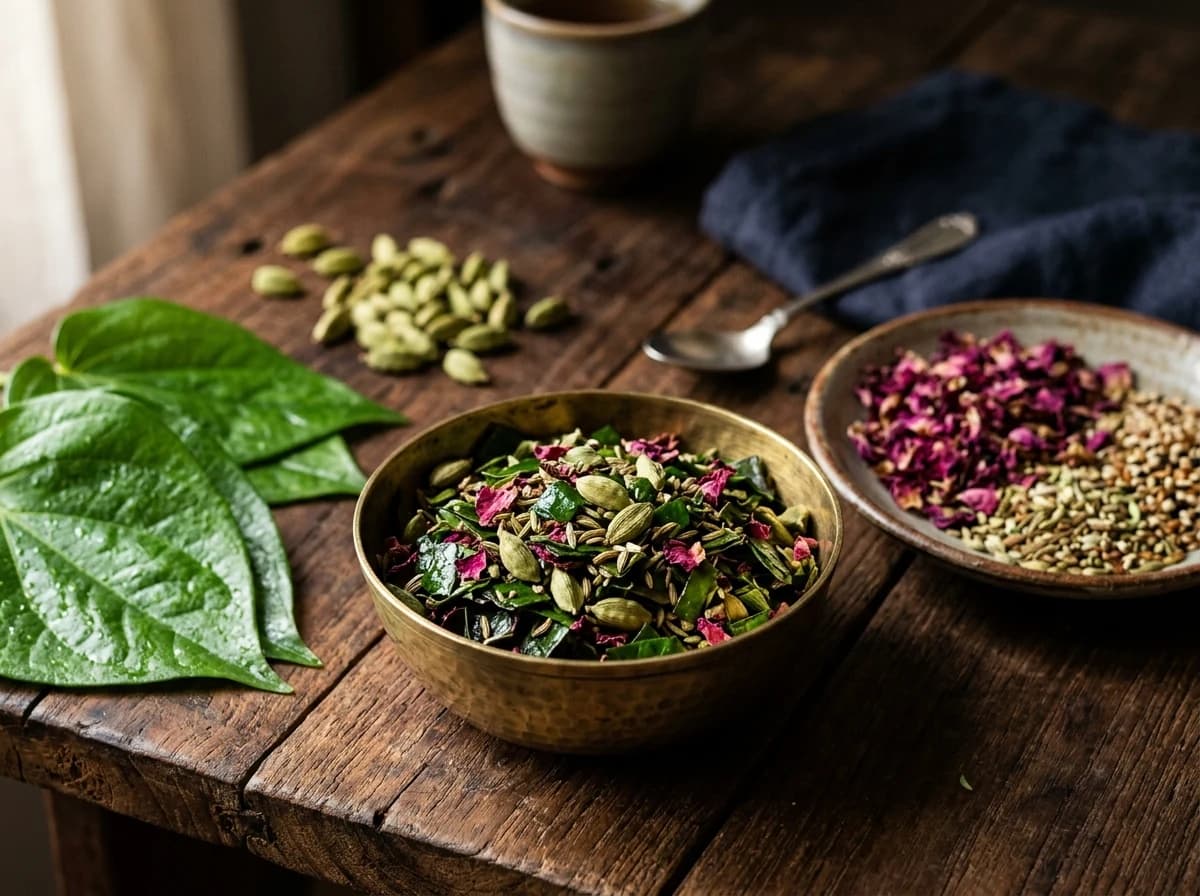
Mintara is not designed to overwhelm the palate — it exists to gently signal completion, balance, and calm at the end of a meal.
Why We Don't Use Supari (Areca Nut) in Our Mukhwas: The Truth Behind Modern Pan Masala
For centuries in Indian homes, the conclusion of a hearty meal was marked by a quiet, fragrant ritual: the serving of mukhwas (mukh meaning mouth, vas meaning scent or dwelling). A small spoonful was placed on the palm, releasing the sweet aroma of fennel, the cooling whisper of rose petals, and the nutty crunch of roasted coriander seeds.
Yet over the past few decades, the commercial mouth freshener category took a dramatic and unfortunate detour. Packaged pan masalas and synthetic mouth fresheners saturated the market, heavily reliant on one controversial ingredient: areca nut (popularly known as supari).
At Mintara Bites, we made an uncompromising choice from day one: Zero supari, zero tobacco, and zero chemical shortcuts. Here is the science, the history, and the culinary philosophy behind why we will never use areca nut in our mukhwas.
1. The Historical Paradox: From Ayurvedic Digestive to Industrial Filler
Traditional mukhwas originated in ancient Indian medicine (Ayurveda) as a functional digestif (Deepana and Pachana). After consuming heavy meals rich in lentils, ghee, and warming spices, the digestive tract requires:
- Cooling carminatives (like sweet fennel seeds and rose gulkand) to ease gastric heat.
- Alkalizing agents (like roasted coriander seeds or dhanadal) to balance post-meal acidity.
- Salivary stimulants (like fresh betel leaf) to activate digestive enzymes.
Nowhere was it intended that people chew hard, astringent areca nuts packed with chemical flavourings after everyday meals. Commercial manufacturers introduced supari because it was inexpensive, acted as an inert filler to bulk up sachets, and contained arecoline—an alkaloid that produces mild neurological stimulation and habituation.
Over time, consumers became accustomed to the hard, abrasive chew of supari, forgetting what real after-meal freshness felt like.
2. What Areca Nut (Supari) Actually Does to Your Body
Medical and dental science has firmly documented the physical toll of habitual supari consumption:
- Oral Mucosal Damage & Stiffness: Areca nut fibers are intensely fibrous and abrasive. Constant chewing causes micro-tears in the delicate inner lining of the mouth, leading to oral submucous fibrosis (OSF)—a painful condition characterized by burning sensations and reduced mouth opening.
- Tooth Enamel Erosion & Staining: The hard tannins in areca nut wear down tooth enamel rapidly, creating micro-cracks and dark permanent stains.
- Hyper-Acidity in the Stomach: Rather than soothing digestion, the alkaloids in areca nut stimulate excess gastric acid secretion, often worsening heartburn and acid reflux after meals.
- Global Health Warnings: The World Health Organization (WHO) and the International Agency for Research on Cancer (IARC) classify areca nut as a known oral irritant and health hazard.
Chewing something that irritates your gums and stomach is the direct opposite of what an after-meal digestive should accomplish.
3. The Natural Ingredients That Actually Help Your Digestion
When you eliminate supari, what creates the satisfying texture and lingering fresh breath? Nature already provided the answer:
A. Pure Rose Gulkand (Damask Rose Preserve)
Real sun-cooked rose gulkand is renowned in Indian tradition for its natural Pitta-shamak (heat-pacifying) properties. It cools the digestive tract, soothes acidity, and imparts a natural floral sweetness without harsh refined sugars.
B. Fresh Betel Leaves (Piper Betle)
Authentic betel leaves are rich in essential volatile oils like chavicol and eugenol. Chewing a small quantity of fresh betel leaf stimulates salivary glands, releases natural antibacterial compounds, and refreshes the breath cleanly.
C. Roasted Coriander Seeds (Dhanadal)
Extracted from the core of coriander seeds, dhanadal is toasted to a gentle golden crisp. It is naturally alkaline and packed with dietary flavonoids that calm post-meal bloating.
D. Sweet Fennel (Variyali) & Carminative Seeds
Fennel seeds relax the smooth muscles of the digestive system, allowing trapped gas to dissipate comfortably. When paired with nutrient-dense roasted flax, sesame, and pumpkin seeds (as in our Seeds Fusion), you receive prebiotic dietary fiber and healthy plant lipids with zero synthetic crunch.
4. The Mintara Bites Standard: FSSAI Registered & Freshness First
Creating a genuinely supari-free and preservative-free product requires higher operational care:
- FSSAI Compliance: Mintara Bites operates as a registered Indian food business under FSSAI Reg. No. 20726031000436. Every ingredient is food-grade, traceable, and thoroughly vetted.
- Cold-Chain Refrigeration for Paan Mukhwas: Because we use real betel leaves and juicy gulkand without artificial drying chemicals or preservatives, our signature Paan Mukhwas is kept refrigerated upon delivery. This keeps it moist, soft, and aromatic—just like a fresh paan from an artisanal master.
- Airtight Aroma-Lock Pouches: Our ambient blends (Seeds Fusion and Coconut Crunch) are packed in triple-layer, resealable stand-up pouches to preserve their natural crunch at room temperature.
5. How to Choose a Clean Mukhwas for Your Family
The next time you purchase an after-meal mouth freshener, use this quick 3-step checklist:
| Check | What to Avoid | What to Look For | | :--- | :--- | :--- | | Areca Nut | Words like Supari, Betel Nut, Chikni, Tukda | Declared 100% Supari-Free | | Tobacco / Nicotine | Any warning labels or statutory warnings | Pure food-grade declaration | | Preservatives | Artificial Class II chemical preservatives | Natural spices, gulkand, roasted seeds | | Licensing | Unregistered homemade unlabeled packets | Verified FSSAI Registration / License |
Final Thoughts: A Thoughtful Finish to Every Meal
We believe that ending a meal should be an act of celebration, hospitality, and wellness—not a habit that compromises your long-term health.
By replacing harsh areca nuts with pure botanical ingredients, we are restoring mukhwas to its rightful place: a delicious, wholesome, and refreshing ritual that everyone in the family can enjoy with total peace of mind.
Explore our handcrafted collection of 100% supari-free mouth fresheners, including our Signature Paan Mukhwas, Roasted Seeds Fusion, and the Mintara Trio Sampler Pack.
 100% Supari-Free
Mintara Paan Mukhwas
Handcrafted with fresh betel leaves, pure rose gulkand, and cooling menthol. 100% supari-free.
Frequently Asked Questions
Why is supari (areca nut) used in commercial pan masala?+
Commercial manufacturers historically added areca nut due to its low cost as a bulk filler and the mild stimulating alkaloid arecoline, which created habitual repeat consumption rather than genuine digestive benefit.
Is Mintara Bites 100% free of areca nut and tobacco?+
Yes. Mintara Bites is an FSSAI-registered food brand (Reg. No. 20726031000436) formulated with zero areca nut (supari), zero tobacco, and zero chemical preservatives. We use only pure food-grade rose gulkand, fresh betel leaves, roasted seeds, and natural digestive spices.
Does betel leaf (paan) require supari to provide after-meal refreshment?+
Not at all. In authentic culinary traditions, fresh betel leaves (Piper betle) combined with cooling rose gulkand, sweet fennel, and coriander seeds naturally cleanse the palate and soothe the stomach without any need for hard areca nut.
How does Mintara Bites preserve fresh betel leaves without chemical preservatives?+
By utilizing small-batch preparation and continuous refrigeration for our Paan Mukhwas. Storing it in the fridge preserves the juicy moisture and aromatic volatile oils naturally.
Next article
Premium vs Regular Mukhwas: What’s the Difference?