

Paan Masala vs Paan Mukhwas: Understanding the Difference
A detailed comparison of paan masala and paan mukhwas, exploring their ingredients, purpose, cultural role, and why mukhwas remains the preferred choice after meals.

Mintara is not designed to overwhelm the palate — it exists to gently signal completion, balance, and calm at the end of a meal.
Paan masala and paan mukhwas are often spoken about in the same breath. Both are paan-inspired, aromatic, and associated with mouth freshness. At a glance, the two can appear similar — colourful, fragrant, and flavourful.
However, their purpose, formulation, and cultural role are fundamentally different.
Understanding this distinction matters for anyone seeking a balanced and intentional after-meal experience, rather than an intense or habit-driven flavour.
What Is Paan Masala?
To understand why mukhwas occupies a distinct place after meals, it helps to first examine what paan masala is designed to deliver.
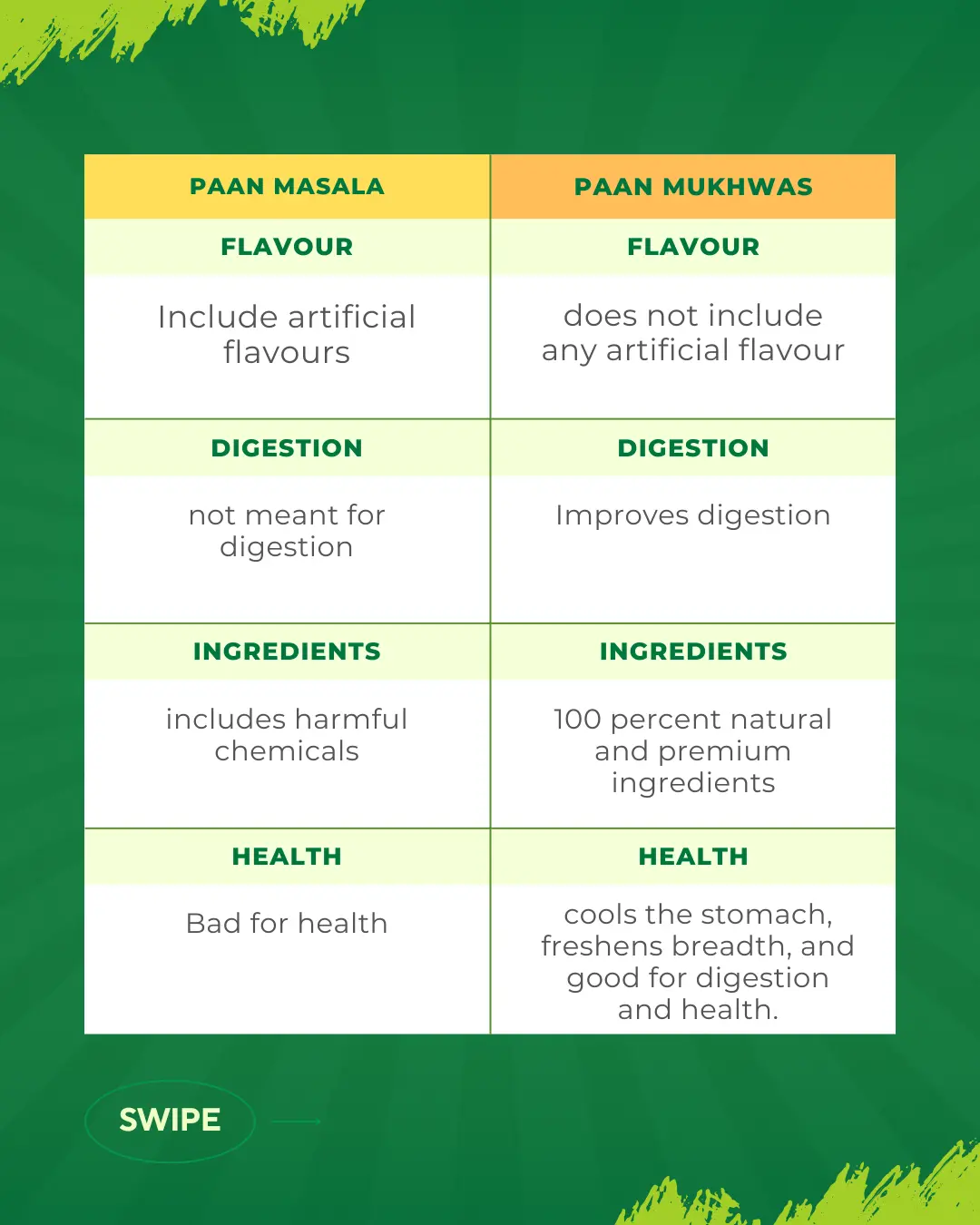
Paan masala is a flavour-forward preparation created primarily for immediate sensory impact. It is commonly associated with strong aroma, sharp taste, and a lingering flavour that dominates the palate.
Historically, paan masala gained popularity as a convenient alternative to freshly prepared paan. Over time, many modern formulations have shifted toward intensity rather than balance, favouring bold flavour compounds that stimulate the senses quickly.
Typical characteristics of paan masala
- High flavour concentration
- Sharp and assertive taste profile
- Habitual or impulse consumption
- Sensory stimulation independent of meals
Because of this, paan masala is often consumed outside the context of dining, sometimes multiple times a day, without any connection to meal completion.
What Is Paan Mukhwas?
Paan mukhwas, by contrast, is deeply rooted in after-meal tradition. Its purpose is not stimulation, but closure.
Traditionally served once a meal is complete, mukhwas functions as a palate cleanser and a gentle conclusion to dining. The experience is meant to feel composed, light, and refreshing — never overpowering.
Rather than dominating the palate, paan mukhwas allows the flavours of the meal to settle gracefully.
Core qualities of paan mukhwas
- Aromatic freshness
- Balanced sweetness and herbal notes
- Clean mouthfeel
- Subtle, lingering aftertaste
The emphasis is on refinement, not force.
Intent Matters: Intensity vs Balance
The most important difference between paan masala and paan mukhwas lies in intent.
Paan masala is designed to stimulate.
Paan mukhwas is designed to restore.
After a meal, the palate benefits more from freshness and calm than from excessive stimulation. A well-made mukhwas respects this moment, offering a gentle signal that the dining experience has reached completion.
This distinction is why mukhwas feels appropriate at the table, while paan masala often does not.
Cultural Role After Meals
In Indian households, serving mukhwas after meals is more than a habit — it is a gesture of hospitality.
Offering mukhwas communicates:
- Completion of the meal
- Thoughtfulness toward guests
- Attention to the dining experience
It reflects a cultural understanding that how a meal ends matters just as much as how it begins.
Paan mukhwas fits seamlessly into this ritual, reinforcing a sense of care, tradition, and refinement.
Ingredient Philosophy
The ingredients used in mukhwas are selected not for sharpness, but for how they contribute to overall harmony.
Rather than overwhelming the senses, they are chosen to support:
- Aromatic balance
- Gentle sweetness
- Freshness
- Comfort after eating
This philosophy makes mukhwas suitable for regular after-meal consumption, without creating sensory fatigue.
Why Paan Mukhwas Is Preferred After Meals
Modern diners increasingly value quality, intention, and experience over sheer intensity.
Paan mukhwas offers:
- A refined finish to meals
- A sense of ritual and closure
- A composed sensory profile
- A clean, refreshed aftertaste
It complements dining rather than competing with it.
For those who view meals as experiences rather than transactions, mukhwas feels like a natural extension of mindful eating.
Final Thoughts
While paan masala and paan mukhwas are often grouped together, their purposes are fundamentally different.
Paan masala emphasizes stimulation and impact.
Paan mukhwas emphasizes balance, freshness, and closure.
For those who value a clean, composed, and thoughtful end to meals, paan mukhwas remains the timeless choice — one that respects both the palate and the tradition of dining itself.
Frequently Asked Questions
Is paan mukhwas the same as paan masala?+
No. Paan mukhwas is designed for after-meal freshness and balance, while paan masala focuses on strong flavour stimulation.
Can paan mukhwas be consumed daily?+
Yes. It is traditionally enjoyed after meals as part of everyday dining.
Why is paan mukhwas considered more refined?+
Because it prioritizes aroma, balance, and subtlety rather than overpowering taste.
Next article
Why the End of a Meal Matters More Than You Think